

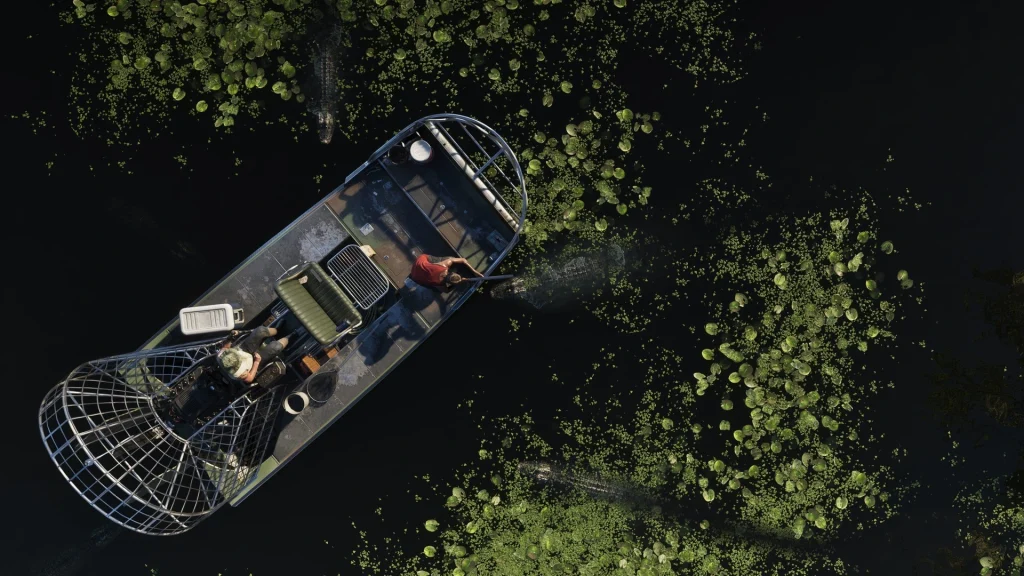
Leonida's official material sets the Grassrivers apart from the beaches and city streets beside them. Here, the wetlands change how players judge distance, pick a vehicle and stay out of sight. Open water, tight channels and wildlife replace Vice City's neat road grid, so simply getting from A to B becomes a decision in its own right.
Water routes do not behave like city streets
Navigation in open-world games often depends on a readable grid. A city map offers lanes, junctions and named roads, while wetlands offer far fewer firm boundaries. A route that looks direct can turn shallow, tighten into a narrow channel or become choked with vegetation. Players have to judge the water and the banks themselves rather than follow a line drawn on tarmac, and that shift can make even a short trip feel unfamiliar.
Four kinds of environmental cue, boat wakes, markers, stilt-built structures and shifts in vegetation, can reveal a navigable channel, which is what keeps routing fair. The best approach teaches these signals through repeated trips, so veteran players can discover a quicker or quieter route without the water becoming an invisible maze.
Vehicle choice becomes part of preparation
Fast cars rule the highway, but they're nearly useless once the road runs out. Boats, airboats and tough off-road rigs each open up their own way of moving through the map. On an open channel you can trade on speed and noise. Hug the bank instead and you move slower, but you keep more cover. Every choice carries a different kind of danger, so no single vehicle covers every situation.
Level designers treat the handoff between land and water as seriously as any other part of a mission. If a player reaches the shore and can't tell where to leave the boat or where to find a ride, the mission starts to feel like a chore. Clear docks, ramps and landing points make switching vehicles feel like a deliberate choice. They also give both sides room to chase, set up an ambush or regroup.
Visibility can work in both directions
Wide open water rewards patience with a long view of the surroundings, but it leaves the player exposed to anyone watching from a distance. Reeds and trees hide you well, though they narrow the camera and slow your progress. Choosing between seeing more and staying hidden becomes a real decision. A path through cover keeps you safer from far-off eyes, yet it leaves you more exposed to an enemy who gets close.
Pursuit and enemy search systems are likely to work on the same principle. Aircraft can dominate open terrain, and boats can seal off the obvious waterways. To escape, the player needs paths that break line of sight without relying on a scripted hiding spot. Weather and time of day change how far anyone can see, so a route that worked on one visit may call for a completely different approach on the next.
Wildlife should affect attention without becoming noise
Grassrivers' imagery points to a living ecosystem, and its wildlife is what keeps the region feeling busy when no mission is underway. That presence works best when it doesn't interrupt every trip. The strongest encounters either reveal something useful, add atmosphere, or present a hazard the player can handle. If animals attacked constantly, the area would stop feeling distinctive and become just another obstacle to clear.
Wildlife can quietly signal that the player has changed the area, since a flock lifting off a still bank or ripples crossing shallow water often reveal a shift before anyone comes into view. Cues like these make the environment easier to read, but only when they appear sparingly and have an obvious cause, so the player can tell a meaningful disturbance from ordinary background noise instead of treating every rustle as a threat’s warning.
The region broadens the meaning of an open world
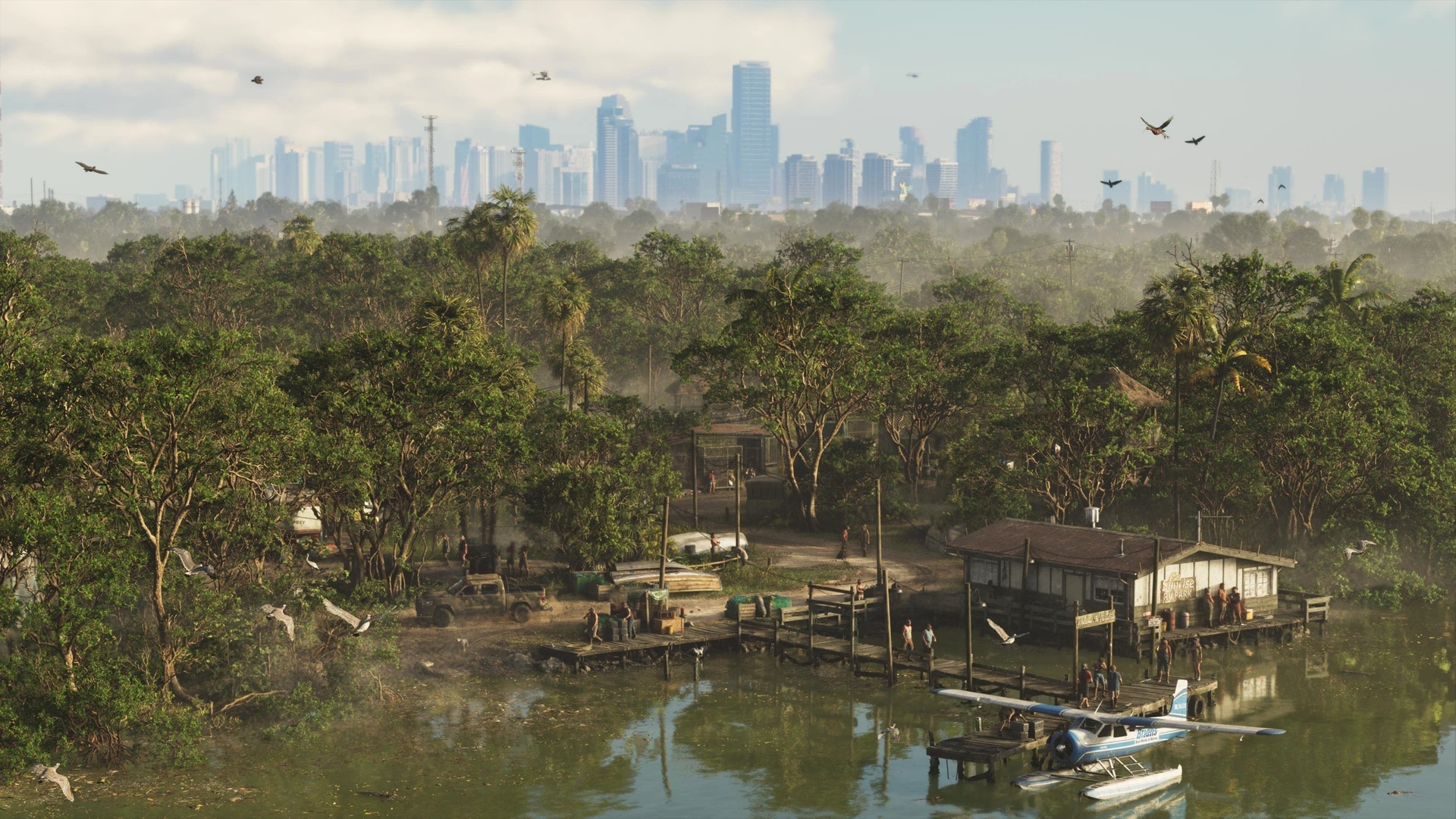
Size alone doesn't make a map worth exploring; a longer trip only matters if it demands something different from the player. The Grassrivers do that. Roads are less dependable, vehicles are more tightly suited to specific jobs, and visibility shifts depending on the route. Together, these make the journey part of the objective rather than dead time between missions.
Rockstar's reveal of Leonida's wetlands is where the Grassrivers first took shape, and the company has so far shown the setting and its visual identity clearly. How the specific mission systems will work is still unknown until players get the finished game in hand. It would be a mistake to expect every stretch of water to conceal its own special event. What seems more likely is that the marshland gives Leonida a way of getting around that Vice City and Port Gellhorn cannot match. Moving through the Grassrivers may also change the rhythm of a play session. Wide open roads invite speed, but the narrow channels reward a sense of the route and a careful choice of vehicle over sheer horsepower. Wildlife, shifting weather and poor visibility can build tension without turning into constant hazards. Over time, the area should feel believable as players pick out landmarks and learn shortcuts. Most importantly, it should give them a reason to leave the highway behind, with a route, encounter or resource that the city could never offer.